You won't find Matsumoto Sanya in most travel guides. That's the first thing to understand. This compact grid of narrow alleys, tucked just east of Matsumoto Station in Nagano, operates on a rhythm that rewards curiosity and punishes hesitation. I wandered in on a Tuesday night last October, expecting a few quiet izakaya. Instead, I found over 200 tiny bars, each no larger than a walk-in closet。each with its own cast of regulars and a mama-san who remembers your face after one visit. Matsumoto Sanya isn't a single venue;it's a dense ecosystem of drinking spots that only makes sense when you walk it.The layout itself is the practical hurdle. Streets here don't follow a neat grid—they twist and dead-end in ways that frustrate Google Maps. My advice: start at the corner of Daimyocho and walk south until you hit the first cluster of lanterns. Look for the vertical signs with tiny characters;those mark the second-floor bars that are easy to miss from street level. Most places seat six to ten people. If the door is open and you hear laughter, step in. If it's closed, don't knock—some bars are members-only or simply full. I learned that after awkwardly rattling a sliding door and getting a polite but firm head shake from a bartender. Respect the signals, and Matsumoto Sanya becomes far less intimidating.Pricing at Matsumoto Sanya runs the gamut, but a few patterns hold. Expect a seating charge (otoshi) of 300–500 yen at most places, and drinks from 500 yen for highballs to 1,200 yen for craft shochu. Cash is king—I found only two bars that accepted cards out of the dozen I visited. The sweet spot is 7–9 PM。when the after-work crowd thins and the night owls haven't arrived. That's when you can actually chat with the bartender, who often doubles as the owner. One spot, a six-seat bar called Kura, had a master who pulled out a hand-drawn map of the district and circled his favorite late-night ramen shop. That kind of local intel is the real currency of Matsumoto Sanya.Language matters more here than in larger nightlife districts. English menus are rare, and many bartenders speak only Japanese. I got by with a few phrases—'osusume wa nan desu ka' (what do you recommend?
) and 'kanpai'—plus a lot of pointing. But here's the thing: the effort is the point. At a standing bar called Tachinomi Rokku, an elderly regular bought me a shot of local sake after I butchered a pronunciation. He laughed。I laughed, and suddenly I was part of the furniture. Matsumoto Sanya rewards humility. Don't treat it like a tourist attraction;
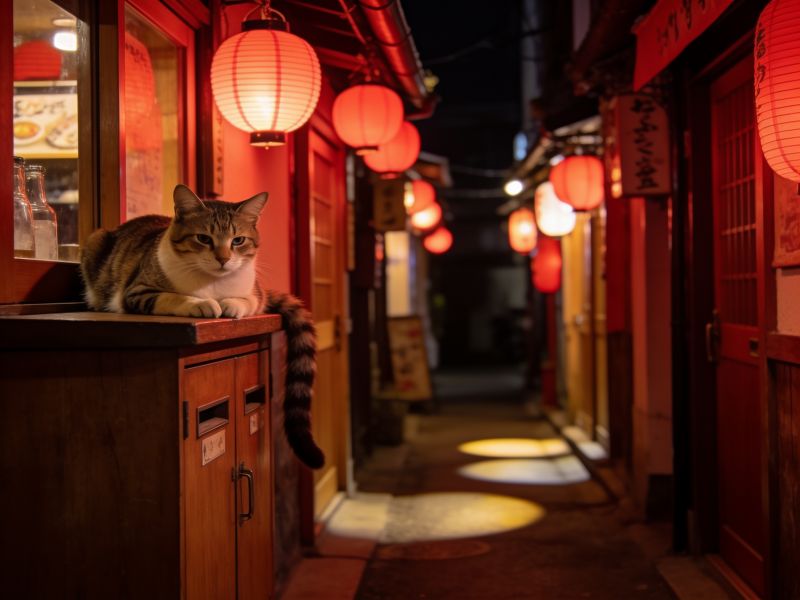
treat it like a neighborhood you're briefly borrowing.Safety and etiquette are straightforward but non-negotiable. Stick to the main alleys after midnight—the side streets get dark。and while I never felt threatened, the district's reputation as a former red-light area lingers in a few corners. Avoid touts;legitimate bars don't have them. And never assume a place is a hostess club just because a woman is behind the counter—most are ordinary snack bars where conversation is the main event. My last night there, I ended up at a bar with no sign, just a red lantern and a cat on the counter. The owner poured me a plum wine and we watched a baseball game in silence. That's Matsumoto Sanya at its best: unpolished, unpretentious, and utterly worth the wrong turns.